

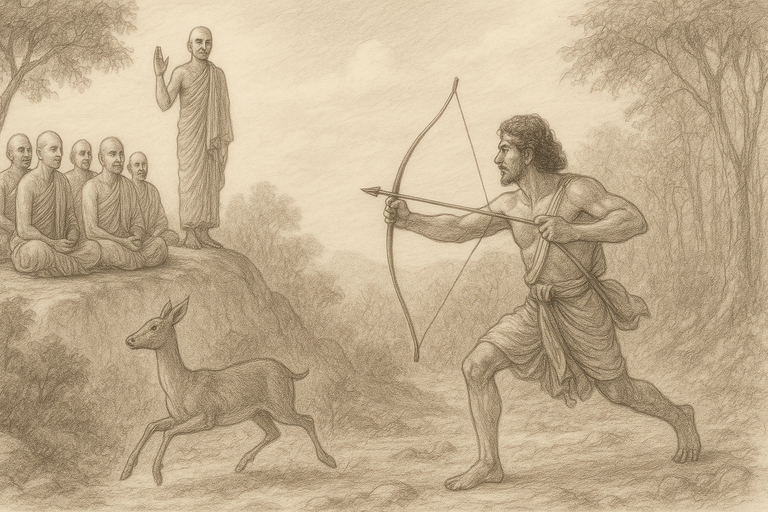

The Meeting at Mihintale – Birth of Buddhism in Sri Lanka
There are moments in history that feel almost magical, moments where time itself seems to pause so that something extraordinary can happen.
For Sri Lanka, such a moment took place over 2,300 years ago on a quiet mountain known today as Mihintale. If you have ever visited the place, you will know the feeling—soft winds brushing past ancient stone steps, birds calling from the trees, and a serene silence that carries the weight of a timeless story.
It was here that Mihindu Thero, the noble monk from India, met King Devanampiyatissa. And it was here that the seeds of Buddhism were first planted in Sri Lanka.
The story of this meeting is more than a religious tale—it is a tale of friendship, wisdom, destiny, and the beginning of a spiritual identity that still shapes our nation today.
WHO WERE THE TWO MEN WHO MET AT MIHINTALE?
Before diving into the story, it helps to understand the two individuals whose meeting changed history.
Mihindu Thero, known as Arahant Mahinda in India, was the son of Emperor Ashoka—one of India’s greatest rulers, a king who turned from war to peace after embracing Buddhism. Mahinda followed in his father’s footsteps, becoming a monk and dedicating his life to spreading the Buddha’s teachings.
Devanampiyatissa, the king of ancient Sri Lanka, ruled from Anuradhapura. Known for his fairness, kindness, and deep respect for nature, he was already a close ally of Emperor Ashoka. But everything in his life was about to change.
WHY DID MIHINDU THERO COME TO SRI LANKA?
According to the chronicles, Emperor Ashoka believed Sri Lanka and its king were ready for a spiritual awakening. But it wasn’t politics or power that brought Mihindu Thero to the island. It was compassion—the desire to share a path of peace and wisdom with a land that had the potential to embrace it wholeheartedly.
THE POSON FULL MOON DAY – A SACRED BEGINNING
It was the Poson full moon day, a night when the skies glowed silver and the forests stood in gentle stillness. On this day, King Devanampiyatissa was out hunting. With bow and arrow in hand, he chased a deer through the forested slopes of Missaka Mountain.
The deer led the king deeper and deeper into the forest until suddenly it vanished. As the king looked around, trying to spot the animal, he heard a calm, clear voice calling out his name.
“Devanampiyatissa!”
Startled, he looked up. Standing atop a rock formation was a figure in saffron robes, emanating calmness and grace. This rock—Aradhana Gala, or Invitation Rock—would later become one of the most sacred places in the country.
The king, surprised that someone not only recognized him but spoke his name with such clarity, lowered his bow and stepped forward.
THE FIRST CONVERSATION BETWEEN A KING AND A MONK
This was not a casual meeting. It was a moment destined to shape an island’s future.
Mihindu Thero greeted the king and tested his intelligence through a series of clever questions involving trees and logic. These questions were not meant to confuse the king—they tested whether he possessed the wisdom to understand the deeper teachings of the Dhamma. The king answered each one wisely and calmly.
Pleased, Mihindu Thero knew the land and its ruler were ready.
Then, beneath the moonlit sky, surrounded by monks and forest trees, Mihindu Thero delivered the first sermon ever heard in Sri Lanka: the Chulla Hatthipadopama Sutta. The king listened with full attention, absorbing every word.
This was the exact moment Buddhism arrived in Sri Lanka.
HOW THE MEETING TRANSFORMED THE KING
The teachings touched the king deeply. He realized that the land he ruled was not simply his to exploit—it was a living ecosystem deserving of compassion and protection. Under the influence of Mihindu Thero:
Wildlife protection laws were created
Natural forests were preserved
Ethical governance grew stronger
People were encouraged to live with compassion
It was as if a new light entered the island, guiding its people toward a more peaceful way of life.
THE SPREAD OF BUDDHISM AFTER THE MEETING
After the historic meeting, King Devanampiyatissa invited Mihindu Thero and his fellow monks to Anuradhapura. The king offered the Mahamevnawa garden to the monks, which later became the first major Buddhist monastery in Sri Lanka.
From here, Buddhism flourished. Monks were ordained, temples were built, and the teachings of the Buddha spread across the island.
The beautiful thing about this transformation is that it happened peacefully. No war. No pressure. No forcing. The people embraced Buddhism because they saw wisdom in it, peace in it, and a sense of purpose in its teachings.
WHERE EXACTLY DID THE MEETING HAPPEN?
The first meeting happened at Aradhana Gala in Mihintale. Even today, thousands of pilgrims climb this rock during Poson, honoring the moment that brought a new spiritual journey to the island.
WHY POSON POYA IS IMPORTANT
Poson Poya isn’t just another religious day. It marks the birth of Buddhism in Sri Lanka. Across the island, people light lanterns, wear white, visit temples, and give dansal. These traditions reflect the values introduced during that first sacred meeting: generosity, compassion, and community.
THE FINAL YEARS OF MIHINDU THERO
Mihindu Thero spent many years teaching and guiding the people of Sri Lanka. He passed away at age 80 in Mihintale—the same sacred hill where he began his journey with the island.
His contribution lives on in the temples we visit, the values we follow, and the way we understand life as Sri Lankans.
ADDITIONAL QUESTIONS THAT DEEPEN THE STORY
Why did Mihindu Thero appear during the king’s hunt?
It is said that the moment was chosen intentionally. The king was distracted, focused on capturing a deer. By stopping him at that moment, Mihindu Thero taught him a lesson in compassion and mindfulness.
What made Mihintale such a special place for their meeting?
Mihintale was peaceful, surrounded by nature, and symbolically positioned as a place where mind and environment connected. It became the perfect setting for the dawn of spiritual change.
How did the people react to Buddhism after the meeting?
Most embraced it willingly. The teachings resonated with the Sri Lankan lifestyle—generosity, respect for nature, and living peacefully. It grew rapidly, shaping the island’s future.
 The Meeting at Mihintale – Birth of Budd...