

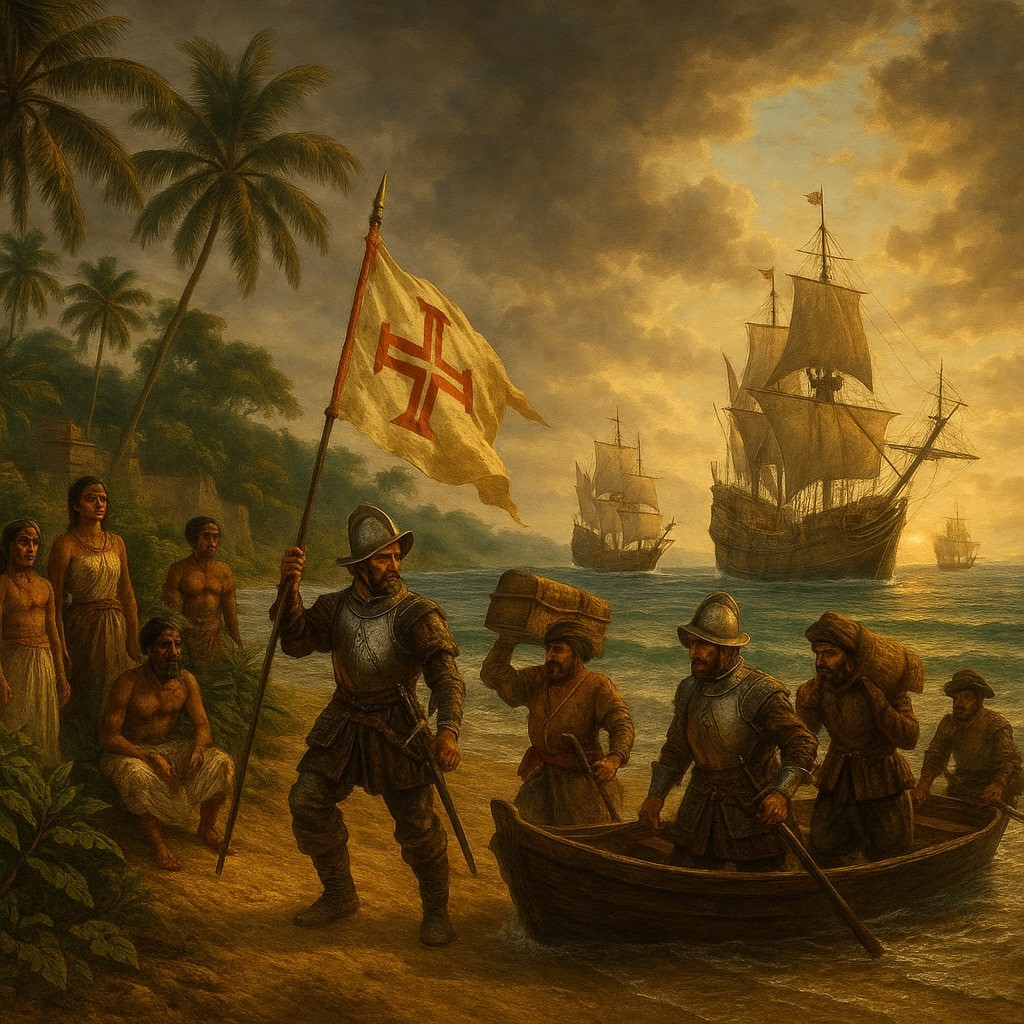

The Arrival of the Portuguese in Sri Lanka
🌍 Introduction
Sri Lanka, with its rich cultural legacy and strategic location in the Indian Ocean, has long attracted global attention. One of the most impactful events in its history was the arrival of the Portuguese in Sri Lanka in the early 16th century. This marked the beginning of European colonial influence on the island, forever altering its politics, religion, and trade.
In this article, we explore the Portuguese arrival in Sri Lanka, their reasons for coming, their interactions with local kingdoms, and the long-term impact of their rule. Whether you're a tourist seeking historical context, or a researcher studying colonial Ceylon, this story is essential to understanding Sri Lanka's transformation.
🛳️ Why Did the Portuguese Come to Sri Lanka?
By the late 1400s, Portugal was a rising European naval power looking to dominate trade routes in Asia. After discovering sea routes to India, Portuguese explorers began expanding their empire eastward. Sri Lanka caught their eye due to:
- Its strategic location along the Indian Ocean trade routes
- Its abundance of cinnamon — a highly valued spice in Europe
- Its political fragmentation, which made influence and occupation more achievable
Thus, the Portuguese didn’t originally set out to conquer Sri Lanka, but rather to establish trade and religious dominance over time.
🧭 The First Contact: 1505
The first Portuguese expedition to Sri Lanka arrived in 1505, led by Dom Lourenço de Almeida. According to tradition, their ship was blown off course en route to the Maldives and landed at Galle, on the southern coast of Sri Lanka.
From there, the Portuguese proceeded to Kotte, the capital kingdom at the time, ruled by King Parakramabahu VIII. The king welcomed the foreigners and agreed to allow Portuguese trade in exchange for military protection.
This marked the beginning of Portugal's influence in Sri Lanka.
⚔️ Divide and Conquer: Alliances and Manipulation
At the time of the Portuguese arrival, Sri Lanka was divided into several kingdoms:
- Kotte (south-west)
- Kandy (central highlands)
- Jaffna (northern peninsula)
- Sitawaka (offshoot of Kotte)
The Portuguese used divide-and-rule tactics, aligning with the Kingdom of Kotte while undermining rivals. In exchange for protecting Kotte from enemies like Sitawaka and Jaffna, the Portuguese were granted control over coastal trade and permission to build forts.
This helped them gradually entrench themselves, not through open conquest, but via military support and religious conversion.
⛪ Spread of Christianity and Cultural Shift
The Portuguese saw their mission as twofold: economic gain and religious conversion. They quickly began spreading Catholicism, often aggressively. Key efforts included:
- Building churches in coastal areas
- Converting local elites and nobles
- Introducing Portuguese language and customs
- Targeting Buddhist temples and traditions
This created tension with local populations, especially in Kandy and Jaffna, where Buddhism and Hinduism were deeply rooted. These cultural and religious shifts laid the groundwork for later conflicts and resistance movements.
🏰 Fortresses and Maritime Control
To solidify their hold on the island’s trade routes, the Portuguese built fortified towns and garrisons in key coastal locations:
- Colombo Fort (first established in 1518)
- Galle Fort (strategically located for southern control)
- Mannar and Jaffna Forts (used to control northern access)
These forts allowed the Portuguese to monopolize the cinnamon trade, enforce religious conversions, and exert influence over local politics.
🛡️ Resistance and the Rise of Kandy
While the Portuguese held sway over coastal areas, they struggled to control the interior highlands, especially the Kingdom of Kandy. Kandy became the center of resistance, offering protection to Buddhists and resisting conversion.
Notable Kandyan kings, such as Vimaladharmasuriya I, led military campaigns against the Portuguese. The kingdom also formed alliances with other European powers (notably the Dutch) to counter Portuguese aggression.
This resistance eventually led to the decline of Portuguese influence and paved the way for the Dutch to take control in the mid-1600s.
⚖️ Impact of the Portuguese Rule
Though the Portuguese presence in Sri Lanka lasted just over a century (1505–1658), their legacy remains strong:
✅ Positive Legacies:
- Introduction of European architecture, town planning, and Christianity
- Establishment of Roman Catholic communities, especially in coastal areas
- Introduction of new foods, such as chili, tobacco, and cashew
❌ Negative Impacts:
- Destruction of Buddhist and Hindu religious sites
- Forced conversions and cultural suppression
- Economic exploitation of natural resources, especially cinnamon
🧭 Is Sri Lanka an Indian Part?
Tourists often wonder, "Is Sri Lanka part of India?" The answer is no. While the two share cultural and religious roots, Sri Lanka has always been a separate island nation, with a unique identity—further shaped by European colonial influences, starting with the Portuguese.
The question “India vs Sri Lanka – are they the same?” reveals a misunderstanding of regional history. Events like the Portuguese arrival highlight how external powers shaped Sri Lanka independently from India.
📍 Why Choose Sri Lanka to Explore Colonial History?
Sri Lanka offers a rare blend of colonial, indigenous, and religious history, all preserved across the island. If you're a traveler or researcher, exploring these Portuguese-era sites can be incredibly rewarding:
- Colombo Fort area: Today a bustling city, it retains traces of Portuguese design
- Galle Fort: Though later rebuilt by the Dutch, it began as a Portuguese outpost
- Mannar and Jaffna forts: Explore ruins from the colonial era
- Catholic churches: Such as St. Anthony’s Shrine in Colombo
🧳 Travel Tips
- Include Galle, Colombo, Mannar, and Jaffna in your itinerary for Portuguese landmarks
- Visit museums like the National Museum of Colombo for artifacts
- Book a Sri Lanka tour guide with a background in colonial history
- Explore Portuguese-influenced cuisine and cultural festivals in coastal towns
📝 Conclusion
The arrival of the Portuguese in Sri Lanka marked a pivotal shift in the island’s history. Their pursuit of spices, souls, and sovereignty reshaped Sri Lanka’s coastlines, religions, and political balance. While their legacy is mixed, it is undeniably important for understanding the island’s evolution.
For tourists, students, and historians visiting journalofsrilanka, exploring this era offers both cultural depth and historical richness. From Galle to Jaffna, the echoes of Portuguese footsteps can still be felt along the tropical shores of this ancient land.
 The Arrival of the Portuguese in Sri Lan...