

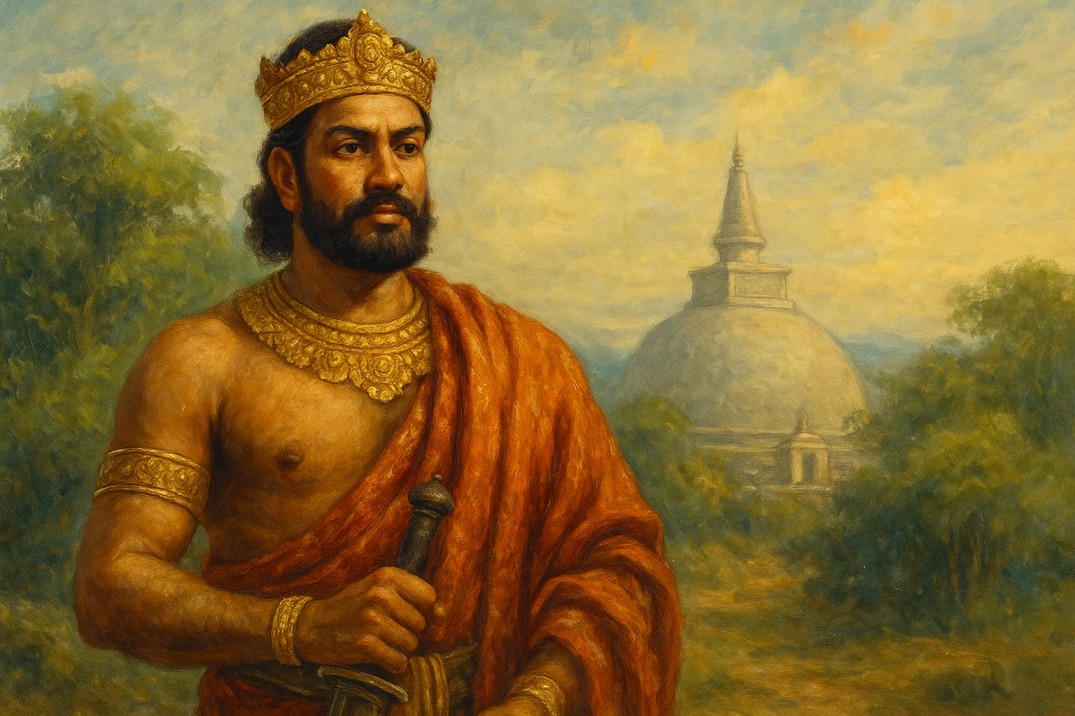

Devanampiya Tissa History, Facts, and Legacy of Ancient Architecture
Have you ever wondered how Buddhism first came to Sri Lanka?
The story begins with King Devanampiya Tissa, a ruler whose vision and faith changed the spiritual and architectural landscape of the island forever. His reign marked not just a political golden age, but the beginning of Sri Lanka’s cultural soul — a union of religion, art, and engineering that continues to awe visitors centuries later.
Q: Who was King Devanampiya Tissa and why is he important in Sri Lankan history?
A: King Devanampiya Tissa (307–267 BCE) was the ruler of Anuradhapura during the arrival of Buddhism in Sri Lanka. He is best known for embracing the teachings of the Buddha after meeting Arahant Mahinda Thera, son of Emperor Ashoka, and for initiating a golden era of religious architecture and cultural harmony across the island.
🏰 A King Guided by Dharma
Devanampiya Tissa ascended the throne at a time when Sri Lanka was a thriving kingdom connected to the great Mauryan Empire in India. He maintained friendly relations with Emperor Ashoka, who had also converted to Buddhism.
According to ancient chronicles like the Mahavamsa, the two kings exchanged gifts and messages that symbolized peace and shared spiritual goals. The title “Devanampiya,” meaning “Beloved of the Gods,” was a token of this royal friendship.
But it was a moment on a mountain that would define his destiny forever.
🕊️ The Sacred Meeting at Mihintale
The story goes that while hunting deer on a mountain later called Mihintale, King Devanampiya Tissa encountered Arahant Mahinda Thera. The monk tested the king’s wisdom through gentle questions before revealing the teachings of the Buddha. Moved and enlightened, the king immediately embraced Buddhism.
This event — the meeting on Mihintale — marks the official introduction of Buddhism to Sri Lanka. From that day, Tissa became a patron of the faith, reshaping the island’s spiritual and architectural future.
🛕 The Birth of Sacred Architecture
Under Devanampiya Tissa’s reign, Sri Lanka witnessed a monumental transformation. He began constructing stupas, monasteries, and temples that reflected Buddhist values of peace and devotion.
🏯 Key Architectural Achievements:
Thuparamaya Stupa – The first stupa built in Sri Lanka, enshrining the right collarbone relic of the Buddha.
Mihintale Complex – Temples and stairways built to commemorate the meeting with Arahant Mahinda.
Isurumuniya Viharaya – A rock temple adorned with exquisite carvings, representing early Sinhalese art.
Royal Gardens of Anuradhapura – Expanded and beautified, symbolizing harmony between nature and divinity.
Each site combined advanced engineering with deep spiritual symbolism, setting the foundation for centuries of Sinhalese architecture.
🌺 A Legacy of Peace and Enlightenment
Devanampiya Tissa’s reign marked the first time Sri Lanka was united under the values of compassion and dharma. Buddhism flourished not as a state religion enforced by rule, but as a philosophy of life that resonated with the people.
The king established the Mahavihara Monastic Complex, which became the heart of Buddhist scholarship for centuries. He also introduced Poya days — lunar observances still celebrated in Sri Lanka today.
🕍 Architectural Philosophy of His Era
Unlike the later, towering stupas of kings like Dutugemunu, Devanampiya Tissa’s constructions were humble yet profound. They emphasized harmony with the environment — low domes, open courtyards, and lotus ponds. The architecture represented the Buddhist middle path: balanced, simple, and deeply meaningful.
The stone craftsmanship of this era introduced features such as:
Intricate moonstones (Sandakada Pahana) at entrances.
Elegant stone pillars symbolizing strength and devotion.
Drip-ledged caves used for monastic living.
These innovations later evolved into the grand design language seen throughout Sri Lankan history.
🌳 The Sacred Bodhi Tree – A Living Symbol
One of Devanampiya Tissa’s greatest legacies is the Sri Maha Bodhi Tree in Anuradhapura — grown from a sapling of the sacred Bodhi tree in Bodh Gaya, India, under which the Buddha attained enlightenment.
The tree was brought to Sri Lanka by Sanghamitta Theri, Emperor Ashoka’s daughter. Devanampiya Tissa personally led the planting ceremony, which symbolized the eternal bond between Sri Lanka and Buddhism.
Today, over 2,000 years later, the Sri Maha Bodhi remains the oldest living human-planted tree in the world with a recorded history — and a place of pilgrimage for millions.
Q: What architectural sites in Sri Lanka are linked to King Devanampiya Tissa?
A: Key sites include the Thuparamaya Stupa, Mihintale, Isurumuniya, and the Sri Maha Bodhi Tree precinct. These sacred spaces are must-visit landmarks for travelers exploring Sri Lanka’s ancient civilization.
Q: Why is Mihintale called the cradle of Buddhism in Sri Lanka?
A: Mihintale is considered the birthplace of Buddhism in Sri Lanka because it was where Arahant Mahinda met King Devanampiya Tissa, leading to the king’s conversion and the island’s adoption of Buddhism as a national faith.
Q: How did Devanampiya Tissa influence Sri Lankan architecture?
A: He pioneered the integration of Buddhist philosophy into architecture. His reign introduced stupas, monasteries, and symbolic carvings that combined spiritual meaning with artistic expression — setting the foundation for centuries of Sri Lankan architectural identity.
✨ Legacy That Still Breathes
Walk through Anuradhapura today, and you’ll feel it — the quiet grace of history.
The stupas stand like eternal guardians; the air hums with prayer. Devanampiya Tissa’s story is not just about power or politics — it’s about transformation. He turned a kingdom into a cradle of civilization, a nation guided by compassion and art.
His architectural legacy continues to inspire modern Sri Lankan design — where stone, light, and nature blend seamlessly, just as they did 2,300 years ago.
Published by Journal of Sri Lanka – www.journalofsrilanka.com
 Devanampiya Tissa History, Facts, and L...